
For Midwest manufacturers, choosing powder processing equipment is rarely a single-machine decision. The right system depends on the material, the process requirements, the surrounding equipment, and the support needed to keep production moving over time.
A dryer, blender, conveyor, feeder, or screening system may solve one part of the process, but each piece of equipment also affects what happens before and after it. Material characteristics, moisture levels, flow behavior, production volume, cleaning requirements, and maintenance access all play a role in finding the right fit.
For facilities evaluating new or replacement powder processing equipment, the best place to start is with the material and the process, not just the machine.
Start With the Material You’re Processing
Material behavior is one of the most important factors in equipment selection. Two powders may look similar, but they can behave very differently once they move through a production environment.
Before selecting powder processing equipment, manufacturers should consider factors such as:
- Particle size and distribution
- Bulk density
- Moisture content
- Flowability
- Abrasiveness
- Temperature sensitivity
- Dusting concerns
- Contamination risks
- Batch consistency requirements
These details affect how a material should be dried, blended, conveyed, fed, screened, or stored. A material that flows easily in one part of the process may bridge, clog, segregate, or create dust concerns in another. Moisture content may also change how the material handles before and after drying or blending.
That is why equipment selection should account for real operating conditions, not just general material categories.
Identify What the Equipment Needs to Do
Once the material characteristics are understood, the next step is identifying the role each piece of equipment needs to play in the process.
Common powder processing functions include:
- Drying or thermal processing to reduce moisture, support product stability, or prepare material for downstream handling.
- Blending or mixing to achieve consistency across batches or combine materials to meet production requirements.
- Conveying and handling to move powders or bulk solids between process stages while managing flow, dust, and product integrity.
- Feeding and metering to control how material enters the next piece of equipment or process step.
- Screening or sizing to support particle consistency, remove oversized material, or protect downstream equipment.
For many facilities, the challenge is not simply identifying which equipment category is needed. It is understanding how each function affects the next stage of production.
Consider the Handoffs Between Drying, Blending, and Handling
Many powder processing issues show up at the transition points between equipment. A dryer may reduce moisture successfully, but the finished material still has to discharge, convey, feed, and blend consistently. A blender may meet batch uniformity goals, but only if the material enters at the right rate and leaves without segregation or buildup.
These handoffs are often where flow problems, dusting, inconsistent feed rates, or quality issues become visible. Evaluating the full path from drying to blending to handling can help manufacturers avoid selecting equipment that works well in isolation but creates problems elsewhere in the process.
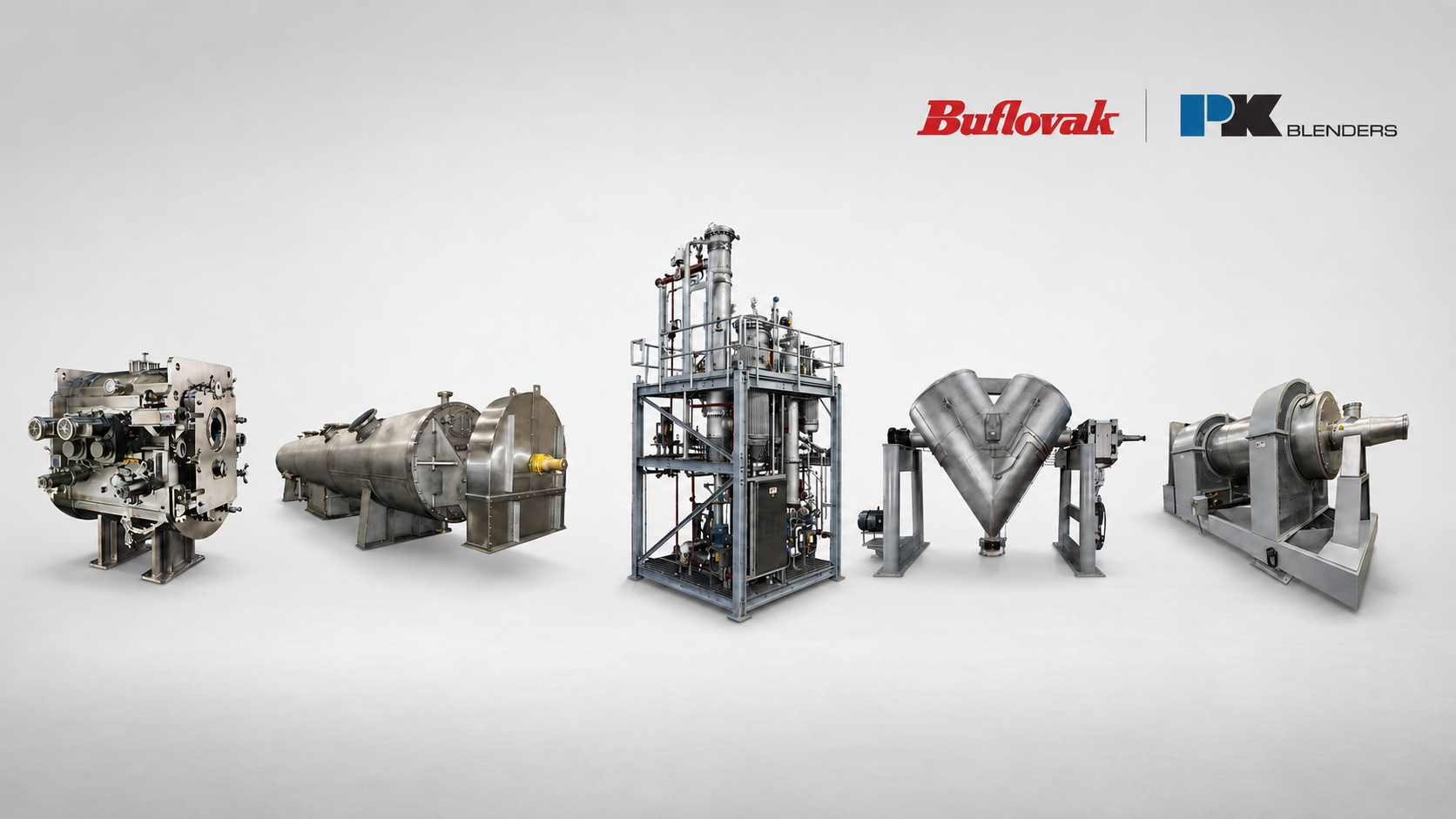
Depending on the application, Midwest manufacturers may need drying, evaporation, blending, or mixing equipment from trusted OEMs such as Buflovak or PK Blenders. The right choice depends on the production goals, material behavior, and how each stage supports the next.
Think Beyond the Individual Machine
A piece of equipment may be technically capable of handling the material, but that does not automatically make it the best fit for the facility.
Manufacturers should also consider:
- Available floor space and installation requirements
- Upstream and downstream equipment
- Maintenance access
- Cleaning and sanitation needs
- Wear parts and replacement part availability
- Downtime risk
- Operator access and safety considerations
- Future production changes or capacity needs
- Long-term parts and service support
These factors can have a direct impact on uptime, maintenance planning, and total cost of ownership. A system that is difficult to access, clean, or service can create avoidable delays even when the core equipment is performing as designed.
For that reason, powder processing equipment decisions should include both process performance and long-term support.
Work With a Supplier Who Understands the Full Process
Choosing powder processing equipment is easier when the supplier understands the equipment, the process environment, and the long-term support needs of the facility.
Mills-Winfield Engineering Sales is a trusted supplier of engineered and standard process equipment for manufacturers across Illinois, Indiana, Wisconsin, eastern Iowa, and Upper Michigan. Since 1930, we’ve helped customers solve complex processing challenges with the right equipment, expertise, and long-term support.
For Midwest facilities, regional support can make a difference. When equipment needs attention, access to the right parts, service knowledge, and OEM-backed resources can help reduce downtime and keep production moving.
From drying and blending to handling and long-term equipment reliability, Mills-Winfield helps customers think through the equipment and support required for their application.
Need Help Evaluating Powder Processing Equipment?
The right powder processing equipment depends on more than the product category. It depends on the material, the process, the facility, and the support needed to keep equipment performing over time.
Mills-Winfield Engineering Sales can help Midwest manufacturers review equipment options, connect with OEM-supported products, and plan for long-term parts and service support.
Contact Mills-Winfield to discuss your powder processing application.