
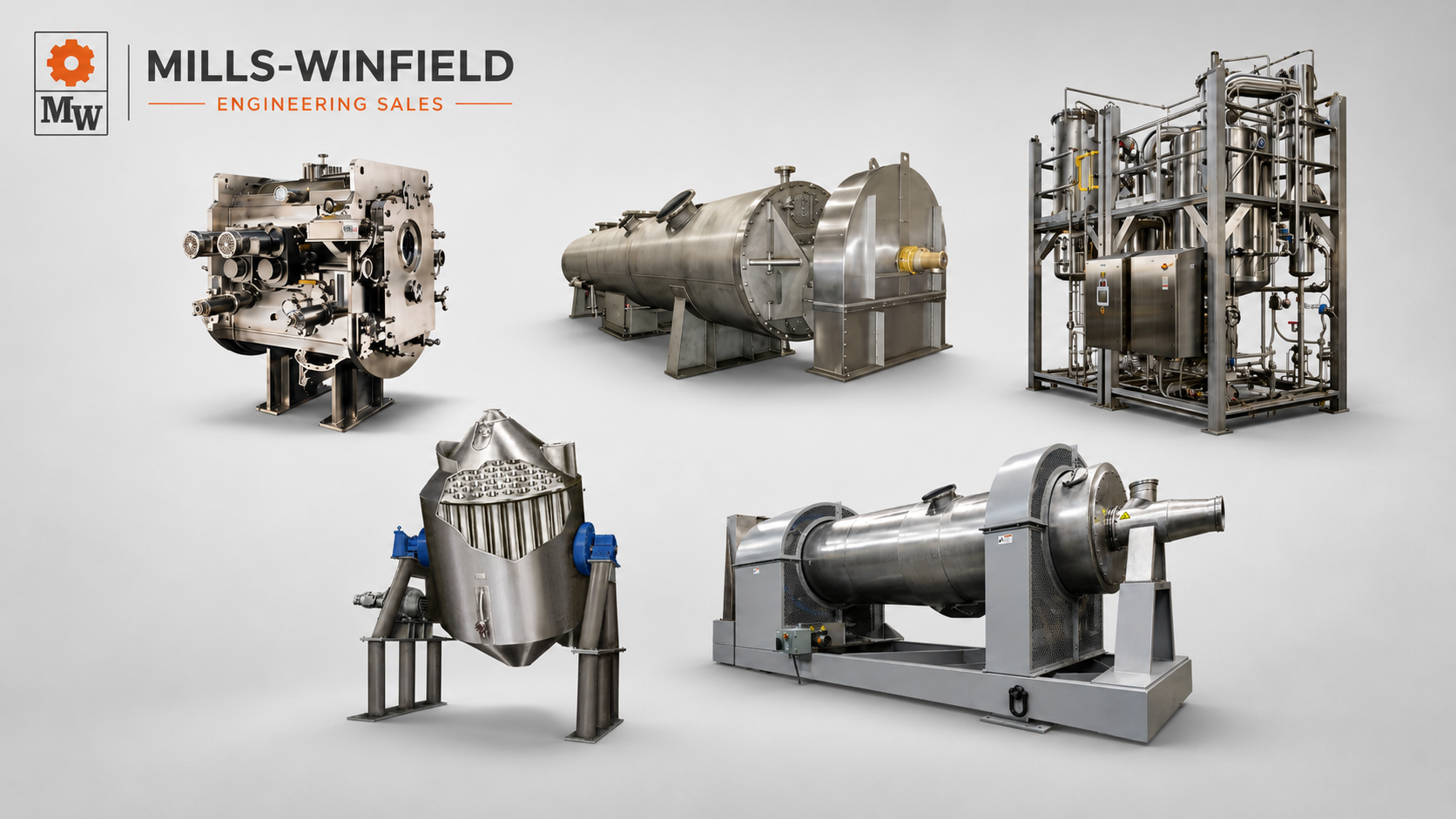
Industrial dryers are built for long-term use, but reliable performance depends on more than the equipment itself. Over time, material behavior, operating conditions, mechanical components, vacuum performance, heat transfer, and parts availability can all affect how well a dryer supports production.
For facilities using dryers as part of a powder processing equipment system, small changes can create larger operational issues. Longer cycle times, inconsistent final moisture, material buildup, harder cleanup, or repeated maintenance needs may indicate that the equipment needs more than routine attention.
Industrial dryer maintenance should help protect uptime, product consistency, and equipment life. When performance begins to drift, a service evaluation can help determine whether the issue is mechanical, process-related, parts-related, or a sign that repair or rebuild planning should begin.
Watch for Changes in Drying Time, Product Quality, and Operating Conditions
A dryer may continue running long after performance has started to change. That is why maintenance teams should pay attention to gradual shifts, not only sudden failures.
A dryer may continue running long after performance has started to change. That is why maintenance teams should pay attention to gradual shifts, not only sudden failures.
Common signs that an industrial dryer may need closer review include:
- Longer cycle times
- Inconsistent final moisture
- Uneven drying
- Product sticking or buildup
- Discharge problems
- Temperature swings
- Vacuum loss
- Increased energy usage
- Product quality changes
- More frequent alarms or shutdowns
- Repeated maintenance on the same component area
- Reduced throughput
- More difficult cleanup
These changes can come from several sources:
- Feed moisture variation
- Changes in material behavior
- Reduced heat transfer efficiency
- Declining vacuum performance
- Mechanical wear affecting agitation, sealing, discharge, or drive performance
- Process demands that have shifted since the equipment was first selected
Dryer performance should be evaluated in context. A slower cycle, recurring product issue, or repeated adjustment may not point to one obvious cause. It may require a broader look at operating conditions, mechanical condition, process demands, and parts availability.
Mechanical Wear Can Affect Dryer Performance
Industrial dryer performance is often discussed in terms of heat, vacuum, or drying time, but mechanical condition matters just as much. Worn or misaligned components can affect reliability, consistency, and service life.
Depending on the dryer design and application, maintenance and service review may include:
- Bearings
- Seals
- Shafts
- Agitators or mixing elements
- Drive components
- Couplings
- Lubrication
- Wear parts
- Alignment
- Gaskets or sealing surfaces
- Discharge components
Wear often shows up gradually before it becomes a larger failure. Seal issues can contribute to vacuum loss. Bearing wear can create vibration, noise, heat, or alignment concerns. Problems with agitation can affect material movement, drying consistency, or discharge performance.
A strong service approach looks beyond the most visible symptom. If the same component keeps failing, the issue may involve load, alignment, material behavior, operating conditions, or another part of the system. Addressing the source is more useful than repeatedly replacing the same part.
Vacuum, Heat Transfer, and Material Buildup Deserve a Closer Look
For many industrial dryers, especially vacuum and thermal drying equipment, performance depends on the relationship between vacuum, heat transfer, vapor handling, and material movement.
Vacuum changes can affect drying time and product consistency. Leaks, seal issues, vapor handling problems, or operating changes can reduce the dryer’s ability to perform as expected. In vacuum drying applications, even small changes can affect how efficiently moisture or solvent is removed.
Heat transfer is another area to watch. Fouling, buildup, scale, or reduced contact with heat transfer surfaces can make the dryer work harder to achieve the same result. Operators may notice longer cycles, temperature inconsistencies, or uneven drying.
Material buildup can also create mechanical and process challenges. Sticking, coating, or uneven movement inside the dryer can affect discharge, cleaning, agitation, and product consistency. If buildup becomes harder to manage over time, the issue may involve the material, operating conditions, equipment condition, or a combination of factors.
These issues are not always solved by changing a setting. They often require a closer look at how the dryer is operating, how the material is behaving, and whether parts and service support is needed.
Parts Availability and OEM Support Become More Important as Equipment Ages
As industrial dryers age, parts availability and service knowledge become more important. If the dryer is still valuable to the process, the right support can help extend equipment life and avoid unnecessary replacement pressure.
OEM replacement parts can help protect fit, compatibility, and equipment integrity. For facilities maintaining an existing dryer, correct fit and compatibility help reduce short-term repairs that create repeat issues.
Parts and service support may be especially important when maintenance teams are dealing with:
- Repeated seal or bearing issues
- Worn agitation or drive components
- Gaskets or sealing surfaces that no longer perform reliably
- Hard-to-source replacement parts
- Unclear service history
- Questions about repair, rebuild, or replacement timing
- Changes in production needs or material demands
The value of OEM-backed support is not only access to replacement parts. It is also the ability to make better decisions about whether a problem is isolated, whether a rebuild should be considered, and whether the equipment still fits the process long-term.
When Routine Maintenance Should Become a Service Evaluation
Routine maintenance is essential, but recurring issues should trigger a broader review. If drying time keeps increasing, final moisture is inconsistent, vacuum or temperature problems return, or the same component fails repeatedly, the dryer may need more than another short-term fix.
At that point, the better question is not only “What part failed?” but “What does the dryer need to return to dependable service?” The answer may involve targeted repair, component replacement, rebuild planning, or replacement consideration, depending on equipment condition, parts availability, application needs, and downtime risk.
Work With a Regional Partner for Industrial Dryer Support
Industrial dryer support is not only about responding to a breakdown. It is about helping facilities protect performance, plan maintenance, source the right parts, and make informed decisions about repair, rebuild, or replacement.
Mills-Winfield Engineering Sales is a trusted supplier of engineered and standard process equipment for manufacturers across Illinois, Indiana, Wisconsin, eastern Iowa, and Upper Michigan. Since 1930, we’ve helped customers solve complex processing challenges with the right equipment, expertise, and long-term support.
For manufacturers using dryers as part of a powder processing system, Mills-Winfield can help evaluate service needs, source OEM replacement parts, and support long-term equipment performance. That support helps maintenance and operations teams move from reactive repairs toward a clearer plan for reliability.
Need Support for Industrial Dryer Maintenance or Service?
If your industrial dryer is showing changes in cycle time, product quality, vacuum performance, mechanical reliability, or maintenance needs, Mills-Winfield can help evaluate the next step.
Contact Mills-Winfield Engineering Sales to discuss industrial dryer maintenance, service, parts, and long-term equipment support.
The original ProRate PLUS product line featured three single screw feeders ideal for feeding pellets, granules, and other free-flowing bulk materials in secondary plastics applications. However, recognizing the need for solutions catering to more challenging materials, Coperion K-Tron expanded its offerings with the ProRate PLUS-MT twin screw feeder.